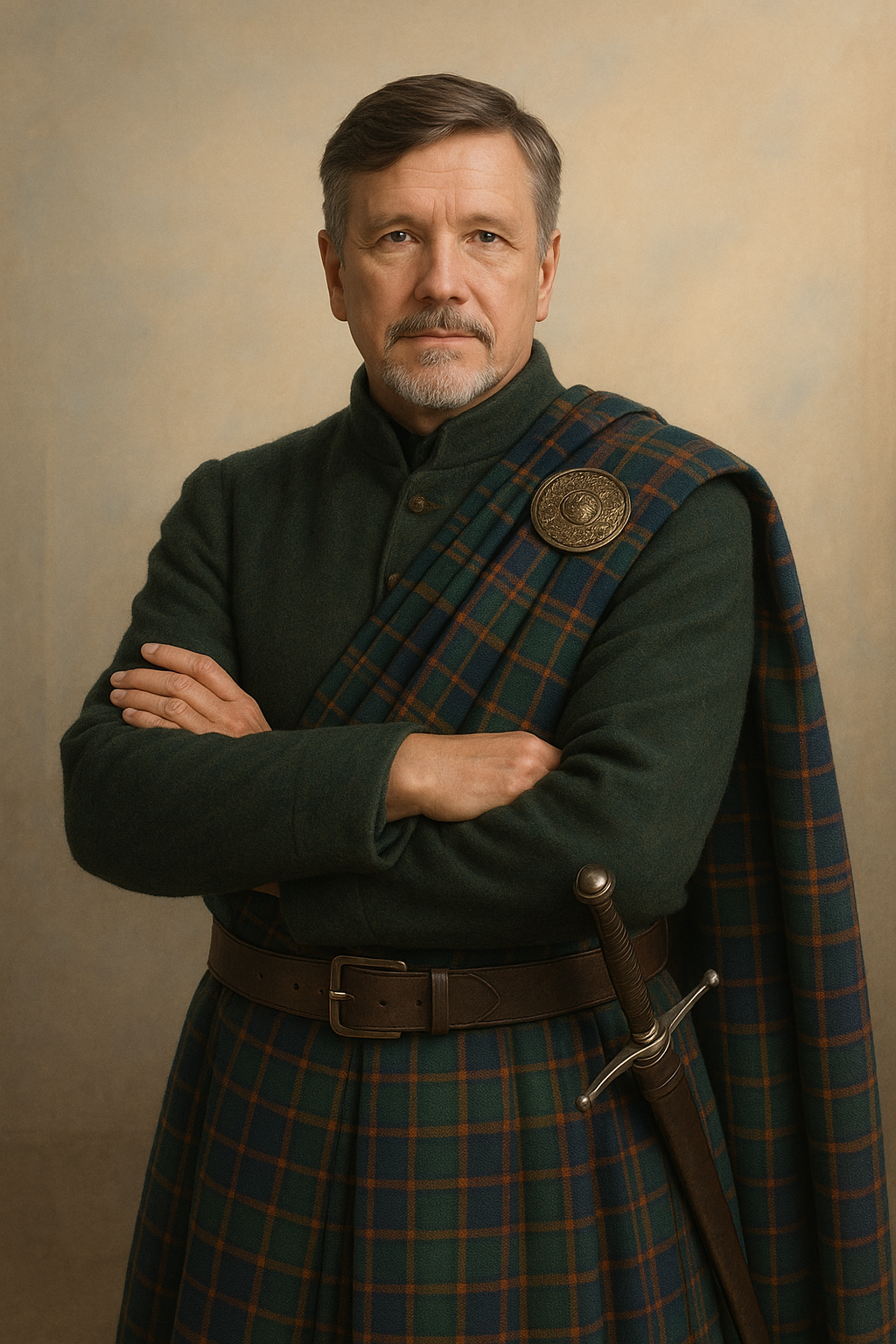

The Grey Army
By Nathaniel Theos and AI
The first time Ben Mercer saw the Grey Army, they were invading the dining room.
At least, that was what it looked like to him.
Ben had made the tactical error of arriving twenty minutes early for Thursday supper with his grandmother. Twenty minutes early at Willowbrook Seniors Lodge was the teenage equivalent of a prison sentence. Time didn’t pass there. It shuffled.
Ben stood near reception, phone in hand, wondering whether he had enough battery to survive until dinner, when he heard them coming.
Click. Shuffle. Squeak.
Click-click. Shuffle. Squeak.
He looked up.
They appeared around the corner in formation. At least fifteen walkers advanced down the hallway, silver frames moving beneath a collection of determined faces and carefully arranged grey and white hair. Several walkers had tennis balls fitted over their back legs. One had a cup holder. Another had a small stuffed moose tied to the front. A particularly elaborate model had a bicycle horn mounted beside the handgrip. Behind them came two mobility scooters and a wheelchair.
Ben stared, and somewhere inside his sixteen-year-old brain, music began playing.
The Imperial March.
Dum. Dum. Dum. Dum-da-dum. Dum-da-dum.
Leading the procession was a tall, thin man with white hair and eyebrows magnificent enough to deserve their own postal code. His walker moved with military precision.
Darth Vader, Ben decided. Except Vader had apparently retired to Alberta, developed arthritis, and traded the black cape for beige orthopedic shoes and a cardigan.
The man stopped. Every walker behind him stopped. Ben’s imaginary music stopped too.
The man slowly turned his head and looked directly at Ben. “You’re blocking the hallway.”
“Oh.” Ben jumped aside. “Sorry.”
The man nodded once, then moved forward. The entire column followed.
Click. Shuffle. Squeak.
Dum. Dum. Dum.
Ben covered his mouth so nobody would see him laughing.
He had no idea that what he’d just witnessed would soon become known as the Grey Army.
More importantly, Ben had no idea that Willowbrook Seniors Lodge was controlled by organized crime.
His grandmother was already seated when he entered the dining room.
“You’re late.”
Ben checked his phone. “I’m eighteen minutes early.”
“Same thing when you’re eighty-four. Sit down.”
Margaret Mercer was five-foot-three, weighed perhaps one hundred and fifteen pounds, and possessed the unnerving ability to make Ben feel guilty using only one eyebrow. Ben kissed her cheek.
“Hi, Grandma.”
“Hello, Benjamin.”
“You look nice.”
“I know.”
Ben smiled. That was Grandma.
They ate together most Thursdays. Ben’s mother called it quality time. Ben called it free food.
Tonight was meatloaf, mashed potatoes, gravy, carrots, and something green that Ben decided was better left unidentified. He was halfway through his second helping when dessert arrived.
Chocolate pudding.
Grandma’s favourite.
Margaret loved chocolate pudding with a devotion normally reserved for religion, grandchildren, and television game shows. A waitress placed a small glass dish beside her plate.
Margaret stared at it.
Then she looked across the dining room.
Ben followed her gaze and saw a woman sitting near the window. She was somewhere around eighty, although Ben had learned never to guess ages inside Willowbrook. She wore a lavender blouse, a pearl necklace, and enough hairspray to protect her head during a tornado.
She was watching Margaret.
Margaret pushed her pudding away.
Ben stared at her. “Grandma? Your pudding.”
“I see it.”
“You love chocolate pudding.”
“I’m not hungry.”
“You had seconds of meatloaf.”
“Growing boy like you shouldn’t question his elders.”
“I’m pretty sure that’s not a rule.”
Margaret picked up her coffee. The woman in lavender continued watching.
A minute later, another woman approached their table. She was tiny, used a walker, and wore enormous red-framed glasses. She stopped beside Margaret. Margaret didn’t look at her.
The woman picked up the chocolate pudding and walked away with it.
Ben stared after her. “Did that woman just steal your pudding?”
“No.”
“Grandma, I watched her take it.”
“Keep your voice down.”
“Why?”
Margaret leaned closer. “Because Ethel hears everything.”
“Who’s Ethel?”
Margaret’s eyes flicked toward the woman in lavender. Ben looked over. The woman smiled at him.
Not warmly.
Ben lowered his voice. “Her?”
“Eat your carrots.”
“Grandma.”
“Benjamin.”
“Why did that woman take your pudding?”
Margaret sighed. “I’ve been cut off.”
Ben blinked. “Financially?”
“No.”
“Wi-Fi?”
“Worse.”
“What?”
“Chocolate pudding.”
Ben slowly lowered his fork. “Dear God.”
Margaret kicked him under the table.
“Ow!”
“Don’t be smart.”
“I’m trying to understand the severity of the situation.”
“You think this is funny.”
“A little.”
“You wouldn’t if you lived here.”
Ben glanced across the room. Red Glasses placed Margaret’s pudding in front of Ethel. Ethel didn’t eat it. She simply nodded.
“Okay,” Ben said. “What exactly just happened?”
Margaret took a sip of coffee. “Taxation.”
Ben nearly inhaled a carrot.
The truth came out slowly, mostly because Margaret didn’t want to tell him.
There were, she explained, certain arrangements at Willowbrook. Nothing official. “Horse trading,” she called it.
Residents exchanged favours. Someone might swap a Tuesday bingo seat for advance notice of a salon cancellation. Someone might save a prime chair on movie night in exchange for a cookie. Pie had considerable purchasing power. Chocolate pudding was practically currency.
Ben found the entire thing hilarious.
Until Margaret explained Ethel.
Ethel Beatrice Carmichael had lived at Willowbrook for seven years. During that time, she’d somehow acquired influence over nearly everything that mattered.
She knew who had family problems. She knew who had complained about the food. She knew whose daughter hadn’t visited in three months. She knew who fell asleep during chair yoga. She knew when someone cancelled a hair appointment before half the residents did. She knew who wanted into Wednesday bridge.
And she knew who liked dessert.
Especially dessert.
“Ethel doesn’t control the salon schedule,” Margaret explained. “She controls information.”
“About haircuts?”
“Among other things.”
Ben stared at her. “That’s her superpower?”
“You laugh. Wait until you’re eighty-four and someone else gets the ten-thirty appointment you’ve been waiting two weeks for.”
Ben attempted an appropriately horrified expression.
Margaret wasn’t impressed.
“She also controls invitations,” she continued. “Cards. Movie groups. Birthday tables. Shopping trips.”
“How?”
“Gossip.”
Ben’s smile faded slightly.
“And dessert?”
“People started giving Ethel desserts as favours. Then favours became expectations.”
“So why are you giving her yours?”
“I’m not.”
Ben pointed across the room. “Grandma, your pudding is literally sitting in front of her.”
“I didn’t give it to her.”
“Then what do you call that?”
Margaret considered the question. “Voluntary compliance.”
“That doesn’t sound voluntary.”
A deep voice came from behind them.
“It isn’t.”
Ben turned. Darth Vader stood there.
Up close, his eyebrows were even more impressive.
“I’m Walter,” the man said.
“Ben.”
Walter nodded toward Ethel. “Your grandmother crossed Carmichael.”
Margaret groaned. “Walter.”
“What?”
“He’s sixteen.”
“Old enough to recognize corruption.”
Ben immediately liked him. “What did Grandma do?”
Walter looked delighted to be asked. “Refused to play cards with Ethel on Wednesdays.”
“I have pottery Wednesday,” Margaret protested.
Walter nodded gravely. “And thus began the chocolate embargo.”
Ben looked at his grandmother. “You’ve been embargoed?”
“Three weeks.”
“Four,” Walter corrected.
Margaret glared at him.
Walter smiled. “Welcome to Willowbrook, son.”
Then he marched away.
Click. Shuffle. Squeak.
Ben’s imaginary Imperial March returned.
Ben began investigating.
At first, he did it because it was funny. He created a note on his phone titled OPERATION PUDDING.
Underneath, he wrote:
BOSS: Ethel Carmichael ENFORCER: Red Glasses KNOWN COMMODITIES: pudding, pie, cake, cookies OTHER CRIMINAL ENTERPRISES: hair appointments, bridge, movie seating VICTIM: Grandma MOTIVE: Grandma chose pottery over cards
Then he started asking questions.
Carefully.
He discovered Red Glasses was named Dorothy Finch. Dorothy was Ethel’s chief collector. There was also Agnes, who apparently specialized in intelligence.
Agnes knew everything.
“How?” Ben asked Walter one afternoon.
Walter glanced around before lowering his voice. “She sits outside the laundry room.”
“So?”
“Everyone talks in the laundry room.”
Ben added AGNES – SURVEILLANCE to his notes.
Then there was Frank.
Frank had no official role anyone could identify.
“What does Frank do?” Ben asked.
Walter shrugged. “Mostly eats cookies.”
Ben typed FRANK – POSSIBLE MUSCLE.
Walter peered at the phone. “Frank’s ninety-two.”
“He could still be muscle.”
“He’s one hundred and twenty pounds.”
“Nobody suspects him.”
Walter considered this and nodded. “Good point.”
What began as entertainment soon revealed a pattern. People who surrendered dessert received little advantages. Nothing large enough for management to notice. A saved seat. A whispered warning that the salon had a cancellation. An invitation to cards. Someone willing to trade dining times.
People who refused weren’t openly punished. They simply found themselves outside.
Outside the card game. Outside the conversation. Outside the little circles of friendship that made living in a seniors lodge feel less lonely.
That bothered Ben more than the pudding.
His grandmother had friends. She could handle herself. Others weren’t so lucky.
One Thursday, Ben noticed an elderly man sitting alone. His name was Mr. Patel. His chocolate cake remained untouched.
Dorothy appeared.
Mr. Patel looked at her, then at his dessert. Slowly, he pushed the cake toward her.
She took it.
Mr. Patel watched it leave.
Ben saw his face.
That was the moment Operation Pudding stopped being a joke.
Mostly.
It was still partly about pudding.
Ben told his older sister that night.
Sophie laughed for almost three minutes.
“You’re making this up.”
“I’m not.”
“Grandma is being extorted for pudding?”
“Yes.”
“By an eighty-year-old woman named Ethel?”
“Yes.”
“And she has enforcers?”
“One of them wears red glasses.”
Sophie collapsed against the kitchen counter. “This is the greatest thing I’ve ever heard.”
“It’s serious.”
That made her laugh harder.
Ben pulled out his phone. “I have documentation.”
“You have a document called Operation Pudding.”
“Evidence.”
Sophie wiped tears from her eyes. “Who’s Frank?”
“Possible muscle.”
“He’s ninety-two!”
“That’s exactly why nobody suspects him.”
Two weeks later, Sophie got a part-time job at Willowbrook.
Not because of the mafia.
She needed money. At nineteen, she’d recently discovered that university textbooks were apparently printed on sheets of gold. Willowbrook needed evening dining-room servers. Sophie needed rent money.
Perfect arrangement.
Before her first shift, Ben gave her one warning.
“Watch Ethel.”
Sophie rolled her eyes. “If she comes at me with a walker, I’ll run.”
“You laugh now.”
“I’ll probably laugh then too.”
Three shifts later, Sophie stopped laughing.
Dessert that night was lemon meringue pie.
Sophie served the slices and then watched.
One moved from Mr. Henderson to Mrs. Clarke. Mrs. Clarke passed it to Dorothy. Dorothy delivered it to Ethel.
Another followed.
Then another.
Within five minutes, Ethel had six pieces of lemon meringue pie in front of her. She ate one. The others disappeared into containers.
Then Sophie saw Mr. Patel.
He hadn’t touched his pie.
Dorothy stopped beside him.
Mr. Patel looked at her, then at his dessert. Slowly, he pushed the plate toward her.
Dorothy took it.
Mr. Patel looked down.
That wasn’t horse trading.
That was surrender.
After dinner, Sophie found him watching television in one of the lounges.
“Mr. Patel, can I ask you something?”
“You may. I reserve the right not to answer.”
“Fair. Why did you give away your pie?”
“I don’t particularly like lemon.”
Sophie waited.
Mr. Patel sighed. “Your brother has been asking questions.”
“He’s subtle.”
“No, he isn’t.”
“Fair.”
Mr. Patel glanced toward the hallway. “I haven’t had dessert in eight months.”
Sophie stopped smiling. “Eight months?”
“I made an unfortunate comment about Ethel’s bridge playing.”
“What did you say?”
“That she cheats.”
“Does she?”
“Of course she cheats.”
Sophie bit her lip. “Why don’t you just keep your dessert?”
Mr. Patel looked at her for a long moment.
“Young lady, I have lived eighty-seven years. I survived a heart attack, two surgeries, forty-three years of marriage, three teenagers, and one extremely unpleasant colonoscopy. I am not afraid of Ethel Carmichael.”
“Okay.”
“I simply prefer peace.”
“Of course.”
“And I would like my Thursday haircut back.”
There it was.
The rebellion began with butterscotch pudding.
Mr. Patel was in his room watching hockey when Sophie knocked. She entered carrying a tray with tea, a napkin, a spoon, and one dish of butterscotch pudding.
Mr. Patel stared at it.
“What is this?”
“Dessert.”
“I can see that.”
“Then we’re off to an excellent start.”
“I cannot accept this.”
“It’s yours.”
“Ethel-”
“Doesn’t work in the kitchen.”
“You don’t understand.”
“I think I do.”
Mr. Patel stared at the pudding, then at Sophie, then back at the pudding. Finally, he picked up the spoon.
“This is extremely reckless.”
“I’ve been told that.”
He took one bite and closed his eyes.
Sophie smiled. “Good?”
Mr. Patel pointed the spoon at her. “You tell no one.”
“Absolutely.”
The next evening, Sophie delivered strawberry shortcake to Mrs. Clarke. Saturday brought chocolate cake to Ruth, a ninety-one-year-old woman who had apparently been exiled after calling Ethel’s Christmas sweater “aggressive.”
By Sunday there were six residents receiving their own desserts.
By Tuesday there were eleven.
Ben handled logistics.
“Room 214 gets rice pudding,” Sophie told him.
“Got it.”
“Mrs. Douglas can’t have dairy.”
“Got it.”
“Walter wants pie.”
“Walter always wants pie.”
“He says it’s for morale.”
“Of course he does.”
They needed a name for the operation. Ben suggested Dessert Storm. Grandma vetoed it immediately.
“Absolutely not.”
Walter suggested Operation Just Desserts.
Everyone agreed.
The first close call happened on a Wednesday.
Sophie was carrying two desserts toward the elevator when Ben appeared around the corner.
“Dorothy. Incoming.”
Sophie turned.
Too late.
Dorothy was approaching from the opposite hallway. Sophie had nowhere to go.
Then a bicycle horn sounded.
Honk-honk.
Walter deliberately swung his walker sideways.
Dorothy stopped. “Walter.”
“Dorothy.”
“You’re blocking the hallway.”
“My wheel appears to be stuck.”
“It isn’t.”
“Are you a mechanic now?”
Dorothy tried to go around him.
Walter moved.
Accidentally.
Very accidentally.
Dorothy moved left. Walter moved left. She moved right. Walter moved right.
“Would you stop that?”
“I’m trying.”
Behind him, Sophie slipped into the elevator with the desserts.
The doors closed.
Walter’s wheel miraculously repaired itself.
“Ah,” he said. “There we are.”
Dorothy narrowed her eyes.
Walter smiled. “Lovely blouse.”
That evening, Ben added another line to Operation Pudding.
WALTER – FIELD OPERATIONS
Walter objected.
“I should be Commander.”
“You’re not Commander.”
“I’ve got military experience.”
“You worked at the post office.”
“Thirty-seven years.”
“That’s not military.”
“You’ve never worked Christmas.”
Ben stared at him, then changed the entry.
WALTER – COMMANDER, FIELD OPERATIONS
Walter nodded approvingly.
“Better.”
Something had changed at Willowbrook.
Residents began talking.
Not gossiping. Talking.
People who had quietly tolerated Ethel discovered they weren’t alone. Mr. Patel wanted his Thursday haircut. Ruth wanted to sit wherever she pleased on movie night. Mrs. Douglas wanted to play cards without paying cookie tribute. Margaret wanted chocolate pudding.
Walter wanted pie.
Walter mostly wanted pie.
As the rebellion grew, Ben began noticing something else.
The walkers.
Walter tapped his walker twice when Dorothy approached. Mrs. Douglas coughed when Agnes entered the room. Ruth parked her mobility scooter near the elevator and became an unofficial lookout.
Frank turned out not to be muscle.
Frank was communications.
He sat near the main lounge and told everyone everything.
Ben watched them one afternoon. Silver hair. Walkers. Canes. Scooters. Quiet signals. People who had been pushed aside were beginning to move together.
“The Grey Army,” he whispered.
Walter looked over. “What?”
Ben smiled. “The Grey Army.”
Walter considered it.
“I like it.”
By dinner, everyone knew the name.
Ethel found out Thursday.
Chocolate pudding night.
Of course.
Sophie had just placed two dishes on a tray when a voice behind her said, “Those aren’t going to the dining room.”
Sophie froze.
Ethel stood in the doorway in her pearls and lavender blouse, her hair immaculate. Dorothy stood beside her.
Ethel looked at the tray. “Who are those for?”
“Residents.”
“Which residents?”
“The residents they belong to.”
Ethel smiled. “Young lady, I think you misunderstand how things work here.”
Sophie set down the tray. “I think I understand perfectly.”
“Do you?”
“Yes.”
For a moment, neither spoke.
Then Ethel stepped closer.
“You are very young.”
“I’ve noticed.”
“People here need order.”
“People here need dessert.”
“You think this is about pudding?”
Sophie paused.
For the first time, Ethel didn’t sound ridiculous.
She sounded tired.
“Maybe not.”
Ethel looked toward the dining room. “People become invisible when they get old. Their families get busy. Their bodies stop cooperating. Decisions get made for them. People start speaking around them instead of to them.”
Sophie said nothing.
For a moment, the woman standing before her wasn’t the head of a ridiculous dessert empire. She was simply an old woman frightened of disappearing.
“If you don’t create a place for yourself,” Ethel said quietly, “sometimes you disappear.”
Sophie softened.
For approximately three seconds.
“That doesn’t give you the right to bully people.”
Ethel stiffened. “I don’t bully.”
“You have an eighty-seven-year-old man afraid to eat pie.”
“He called me a cheat.”
“You are a cheat.”
The voice came from the hallway.
They both turned.
Mr. Patel sat outside the doorway. Walter stood behind him. Then Margaret appeared, followed by Ruth, Mrs. Douglas, and Frank.
More walkers emerged from both directions.
Click. Shuffle. Squeak.
Click-click. Shuffle. Squeak.
Ben stood at the end of the hallway.
And suddenly the Imperial March returned inside his head.
Dum. Dum. Dum.
Only this time Walter wasn’t leading the Empire.
He was leading the rebellion.
Ethel stared at them. “What is this?”
Walter straightened.
“The Grey Army.”
Margaret groaned. “Oh, Walter.”
“What? It’s a good name.”
“It’s ridiculous.”
“That’s why it’s good.”
More residents appeared.
Ethel looked from face to face. “What exactly do you people want?”
Mr. Patel raised his hand. “My Thursday haircut.”
Ruth spoke next. “I want to sit wherever I please.”
Mrs. Douglas lifted a finger. “I want my cookies.”
Someone at the back shouted, “I want cheesecake!”
Walter turned. “We don’t have cheesecake tonight, Frank.”
“I know. I’m thinking ahead.”
Then Margaret stepped forward.
She was the smallest person in the hallway.
She didn’t look small.
“I want my pudding.”
Ben went to management.
Not Sophie. Not Walter.
Ben.
He had started Operation Pudding. He had collected the names, written down what residents had told him, and noticed something management had never seen.
A pattern.
The lodge manager, Karen, listened as Ben explained. At first, she looked confused.
“You’re saying residents have been trading desserts?”
“No. I’m saying there’s organized crime.”
Margaret slapped his arm.
“Don’t exaggerate.”
“Grandma, Walter has lookouts.”
“Situational awareness,” Walter corrected.
Ben pulled out his phone. “I’ve been keeping notes.”
Karen read them.
Her eyebrows rose.
“Possible muscle?”
Frank raised his hand. “That was me.”
“He’s communications now,” Ben explained.
“Promotion,” Frank said proudly.
One by one, the residents told their stories.
The salon cancellations. Card games. Seats. Gossip. Social exclusion. Desserts collected as payment.
No single incident seemed enormous.
Together, they weren’t funny at all.
Karen looked horrified. “We thought you were horse trading.”
Margaret nodded. “That’s what we let you think.”
“Why didn’t anyone tell us?”
Nobody answered.
Finally, Mr. Patel spoke.
“Because dignity is a strange thing. When you’re young, asking for help can make you stronger. When you’re old, sometimes asking for help feels like confirmation that you’re losing control.”
The room quieted.
Karen looked around at them. “We should have noticed.”
Margaret nodded. “Yes.”
Karen swallowed. “I’m sorry.”
Margaret reached across and touched her hand.
“But now you have.”
That was enough.
The changes weren’t dramatic.
They didn’t need to be.
Staff became more involved in communicating salon cancellations and activities so one resident couldn’t control information. Social events became more openly organized. Residents could privately report bullying or exclusion.
And nobody could claim another person’s dessert unless that person clearly offered it.
Everyone was also reminded that a dining-room pudding cup was not legal tender.
That last rule wasn’t actually written down.
Ben thought it should have been.
Ethel wasn’t expelled.
Nobody wanted that.
She still lived at Willowbrook. She still played cards. She still wore pearls. She still possessed enough hairspray to violate several environmental regulations.
But her empire was finished.
Something else happened too.
People started inviting Ethel to things without being afraid of her.
At first, she didn’t know what to do with that.
Then one Wednesday, Margaret approached her in the lounge.
“Pottery. Two o’clock.”
Ethel stared at her. “You’re inviting me?”
“That’s generally what it means when someone tells you where something is and what time it starts.”
“You hate me.”
“No, I don’t.”
“I took your pudding.”
“You took four.”
Ethel hesitated.
“Five.”
Margaret’s eyes narrowed. “I knew it.”
Ethel almost smiled.
Margaret sighed. “Pottery?”
“I don’t know anything about pottery.”
“Neither does Walter, but he keeps making ashtrays.”
“I don’t smoke.”
“Neither does Walter.”
From across the lounge, Walter shouted, “They’re decorative!”
The following Thursday, Ben arrived early again.
This time deliberately.
He stood near reception and waited.
Soon he heard it.
Click. Shuffle. Squeak.
Around the corner came Walter. Behind him came Margaret, Mr. Patel, Ruth, Mrs. Douglas, Frank, and the others.
Walkers gleamed beneath the hallway lights. Ruth’s mobility scooter hummed. Somebody squeezed the bicycle horn.
Honk-honk.
Ben smiled.
Dum. Dum. Dum.
Walter stopped beside him. “You coming?”
“Where?”
“Dinner.”
Ben looked toward the dining room. “What’s dessert?”
Walter’s expression became solemn.
“Chocolate pudding.”
Ben nodded. “Big night.”
“Very.”
They entered together.
Ethel was already seated.
Sophie emerged from the kitchen carrying a tray of chocolate puddings. She distributed them one at a time. One to Walter. One to Mr. Patel. One to Ruth.
One to Ethel.
And finally, one to Margaret.
Margaret stared at hers.
For just a moment, the dining room became strangely quiet.
Ethel looked at Margaret.
Margaret looked at Ethel.
Then Margaret picked up her spoon.
“I believe this one’s mine.”
She took a bite.
Around the room, spoons began moving. Mr. Patel closed his eyes dramatically. Walter lifted his pudding dish like a champagne glass.
“To the Grey Army.”
“Oh, for heaven’s sake,” Margaret said.
But she raised hers too.
One by one, others followed.
Even Ethel.
“To the Grey Army.”
Ben looked around the room.
The first time he’d seen them, he’d seen walkers, wheelchairs, canes, grey hair, and old people moving slowly toward dinner.
Now he saw something different.
People.
Funny, stubborn, complicated people who argued and forgave. People who still wanted to belong. People who cared who sat beside them at dinner and whether someone remembered their birthday. People who worried about their hair, cheated at bridge, made terrible pottery, told inappropriate jokes, and sometimes fought over television chairs.
People who wanted to make their own choices, even if the choice was nothing more important than whether to eat chocolate pudding.
Maybe especially then.
Walter leaned toward Ben.
“Pie tomorrow.”
Ben smiled. “Good pie?”
“Apple.”
“Nice.”
Walter lowered his voice. “I can get you two pieces.”
Ben stared at him.
Walter stared back.
One magnificent eyebrow rose.
“Walter.”
“What?”
“We’re not starting another mafia.”
“It’s not a mafia.”
“You’re offering me black-market pie.”
Walter considered this carefully.
“Horse trading.”
Margaret groaned.
Ben burst out laughing.
And somewhere inside his head, the Imperial March began playing again.
Authorship & AI Acknowledgement
The Grey Army is a short story by Nathaniel Theos and AI. The story concept, creative direction, characters, tone, and core storyline were developed by Nathaniel Theos. Artificial intelligence was used as a collaborative creative tool to help explore story ideas, develop scenes, create the visual cover artwork, and assist with the complete four-stage editing process.
The human author guided the story’s intent, humour, emotional balance, revisions, and final creative decisions. AI served as a writing, visual, and editorial assistant in bringing that vision to the page.
This story is a work of fiction. Names, characters, places, organizations, and incidents are products of the author’s imagination or are used fictitiously. Any resemblance to actual persons, living or deceased, or actual events is coincidental.