
The Road Between Us
By L. Neil Thrussell and AI
Claire Delaney recognized Daniel Rowan by his voice. Not his face. Not the silver in his hair, or the way he stood at the motel counter with one hand resting beside a paper cup while snow melted from the shoulders of his coat. Certainly not his profile, which had broadened and softened with age. It was the voice. She had just pushed through the motel entrance, fighting a North Dakota wind determined to come inside with her, when she heard it from across the lobby.
“I understand I-94 is closed. I’m only asking whether closed means until morning or until somebody decides they’ve had enough coffee to look at the road again.”
The woman behind the counter laughed.
“So far, it means closed.”
“That is disappointingly official.”
Claire stopped with one glove halfway off. Forty years had deepened the voice. Radio had polished it. There was more gravel in it now, perhaps more patience, but the rhythm was unchanged. That slight pause before the final few words. The quiet suggestion that he knew exactly where the sentence was going and was willing to wait for everyone else to catch up. Claire knew that pause. She had first heard it through headphones in a cramped university radio booth that smelled of coffee, dust and overheated electronics. The man at the counter laughed. That confirmed it.
“Daniel Rowan?”
He became still. For a moment, he did not turn. Then he looked over his shoulder. Recognition was not immediate, and Claire was strangely grateful for that. His eyes moved carefully across her face, as though searching through a badly organized archive and trying to match the woman standing before him with someone preserved at twenty-one. Then his expression changed.
“Claire?”
She smiled.
“You still sound exactly the same.”
Daniel touched his hair.
“That makes one part of me.”
She laughed. Something moved across his face. He had forgotten that laugh. No, that was not quite true. He had forgotten what it felt like to hear it from three feet away.
“Claire Delaney,” he said.
“Still.”
“I wasn’t sure.”
“That I was Claire?”
“That you were still Delaney.”
“I’m Delaney again.”
He nodded. Questions were clearly present, but he left them alone. Claire appreciated that. Outside, the wind struck the glass doors hard enough to make them tremble. Snow moved sideways across the parking lot, erasing the tire tracks almost as soon as they appeared. Daniel glanced toward the windows.
“You’re stranded too?”
“Apparently.”
“Where were you headed?”
“Fargo. Wedding tomorrow.”
His smile appeared almost immediately.
“Of course.”
Claire narrowed her eyes.
“What does that mean?”
“You still photograph weddings?”
“Thirty-seven years and counting.”
Daniel shook his head softly.
“That fits.”
“I’m not sure whether that was a compliment.”
“I’m not sure either.”
“Good. You really haven’t changed.”
They both laughed. Then, for several seconds, neither spoke. Claire became suddenly aware of how strange it was to stand in front of someone who had known a version of her that no longer existed anywhere except photographs and memory. Daniel had known her before the children. Before the mortgage. Before marriage and its ending. Before reading glasses, arthritis in her right thumb and the small scar beneath her chin from slipping on ice while carrying two cameras and refusing to sacrifice either. He had known the woman who believed life could be properly composed if she paid enough attention to the edges. Claire wondered what he saw now. Daniel wondered the same thing.
He remembered Claire at twenty-one with a camera hanging from one shoulder and her hair caught in whatever clip or elastic she had found that morning. She photographed everything. Bands. Crowds. Old buildings. Road signs. Empty diner booths. Strangers laughing when they did not know anyone was watching. Daniel eating a hamburger while insisting that photographing a man mid-chew violated several basic human rights. He had never understood why she wasted film on ordinary things.
“You still carry a camera?” he asked.
Claire lifted the bag on her shoulder.
“Two.”
“I should have known.”
“What about you?”
“What about me?”
“Still talking for a living?”
“For another six months.”
She looked surprised.
“You’re retiring?”
“That’s the plan.”
“I thought they’d have to remove you from the studio with a crowbar.”
“So did I.”
“Where are you now?”
“Minneapolis.”
Her eyebrows lifted.
“Minneapolis?”
“Twenty-eight years.”
Claire smiled slowly.
“You actually did it.”
Daniel looked at her.
“Did what?”
“Made it to a major market.”
He shrugged.
“It took awhile.”
“No. Don’t do that.”
“Do what?”
“Make it sound like nothing.”
Daniel smiled. Claire continued.
“You used to talk about big-city radio like it was some impossible kingdom.”
“Minneapolis eventually let me through the gate.”
“And then couldn’t get rid of you.”
“That part may be closer to the truth.”
She studied him for another moment.
“I’m proud of you.”
The words caught him off guard. Not because nobody had ever said them. His wife had. His children had. Listeners had written letters and emails over the years. Colleagues had said it when anniversary cakes appeared in the staff room. But Claire had known him when radio consisted of a university booth, a second-hand microphone, stacks of records and the conviction that somewhere beyond campus somebody might eventually pay him to do what he loved.
“Thank you,” he said.
His voice had lost its professional polish. Claire noticed. The woman at the front desk turned up a television near the breakfast area. A weather map showed heavy snow sweeping across central North Dakota. Interstate 94 was closed in both directions near Jamestown, with additional closures stretching east and west. Claire sighed.
“I suppose we’re here for the night.”
“Looks that way.”
“What are you doing this far west?”
Daniel smiled.
“Granddaughter.”
“You have a granddaughter?”
“Six weeks old.”
“And you waited six weeks?”
“I didn’t wait. Her parents moved the visit twice, then the station moved my vacation once. I’m finally getting there.”
“Bismarck?”
He nodded.
“My son moved there three years ago. I’ve seen enough photographs to qualify as an expert, but I haven’t held her yet.”
Claire’s expression softened.
“Then that is important.”
“It is.”
She smiled.
“I have three grandchildren.”
“Of course you do.”
“What does that mean?”
“I don’t know, but apparently you’re winning.”
“It isn’t a competition.”
“Spoken like someone who has three grandchildren.”
The motel restaurant had stopped serving dinner because several employees had gone home before the storm worsened. The clerk showed them what remained in a refrigerated case. Two sandwiches. Microwave soup. Three salads that had entered a stage of life requiring optimism. Daniel studied the selection.
“Romance is alive and well on Interstate 94.”
Claire looked at him.
“Who said anything about romance?”
He froze for just long enough. Then she smiled.
“Relax, Rowan.”
“There she is.”
“Who?”
“The woman who enjoyed watching me panic.”
“You made it easy.”
They carried their food to a seating area beside a gas fireplace that produced convincing flames and almost no heat. Conversation stayed safe at first. Daniel lived in Minneapolis. Claire lived outside Calgary but spent so much time travelling for weddings that her daughters occasionally accused her of owning a house primarily as storage. Daniel had two children. His daughter was thirty-four and his son thirty-one. Claire had two daughters, thirty-six and thirty-three.
“You really do have three grandchildren?” Daniel asked.
“I would show you pictures, but we’ve only just met.”
He stared at her. Claire smiled.
“I’m joking. I have approximately six thousand.”
“There she is again.”
He asked about photography. Claire had photographed more than eight hundred weddings. She no longer accepted every booking. Her knees had renegotiated the terms of employment, and she had finally learned to listen to them.
“You still enjoy it?” Daniel asked.
“Most of the time.”
“After eight hundred weddings?”
Claire thought about that.
“I still like beginnings.”
Daniel smiled faintly.
“That sounds like you.”
She lifted her coffee.
“My marriage ended.”
He looked at her.
“Seven years ago. Nothing dramatic. No affair. No plates thrown across the kitchen.”
“I’m sorry.”
“You don’t have to be. We were married thirty-two years. We raised two good women. We travelled. We laughed. We had a good marriage for a long time.”
Daniel waited.
“Then somewhere along the way we became better at being family than being married.”
“You tried?”
“For years. Counselling. Trips. More talking. Less talking. Eventually we admitted we were both staying because neither wanted to be the person who ended it.”
“Are you still friends?”
“Yes. Mostly.”
“Mostly?”
“He still loads the dishwasher incorrectly.”
Daniel smiled.
“Some things are unforgivable.”
“He has grandchildren too, so we see each other. Birthdays. Christmas sometimes. It took awhile, but we found something that works.”
Daniel looked down at his coffee. Claire had noticed his wedding ring earlier. It was not on his ring finger. He wore it on the smallest finger of his left hand. She had deliberately not asked. Now Daniel touched it without seeming to realize he was doing so.
“My wife died four years ago.”
Claire’s face softened.
“I’m sorry, Daniel.”
“Her name was Joanne.”
Claire waited. He remembered that about her. She knew how to leave silence alone.
“Cancer,” he said. “Eleven months from diagnosis.”
Claire closed her eyes briefly.
“We were married thirty-one years.”
“That’s a life.”
“It was.”
He looked toward the artificial flames.
“She taught Grade Four for twenty-eight years. Grocery shopping with her took forever because every aisle seemed to contain somebody whose child had been in her classroom. She remembered them too. Every name.”
“She sounds wonderful.”
“She was.”
He smiled.
“And funny. Much funnier than me, which she reminded me of regularly.”
Claire smiled. Daniel looked directly at her.
“I loved her very much.”
“I know.”
The answer surprised him.
“How?”
“Because of the way you said her name.”
Something tightened in his throat. He looked away. Claire did not reach across the table. She did not say she understood grief she had never lived. She simply stayed. After a while Daniel looked at the ring.
“People sometimes think I’m still married.”
“You were.”
He glanced at her. Claire shrugged gently.
“I don’t think death changes the truth of that.”
Daniel sat quietly. Then he nodded.
“Thank you.”
The storm intensified. By eight o’clock the parked cars had become white shapes beneath the parking lot lights. The clerk announced that I-94 would remain closed until morning. Daniel and Claire exchanged a glance. Neither complained. Daniel noticed. So did Claire. A family with two small children eventually claimed the seats near the fireplace, so Daniel and Claire moved to the breakfast area. Someone found a deck of cards behind the front desk.
“You still cheat?” Daniel asked.
“I never cheated.”
“You absolutely cheated.”
“You were terrible at cards.”
“That isn’t the same thing.”
“It feels similar when you lose.”
They played three hands before abandoning the game because neither remembered the rules the same way. Daniel’s phone rang. He glanced at the screen.
“My daughter.”
“Answer it.”
“I was going to.”
“You used to ignore phones.”
“Phones used to be attached to walls.”
He stepped away. Claire watched his reflection in the dark window rather than looking directly at him. His voice changed when he spoke to his daughter. Softer. Less polished. The radio personality disappeared. He laughed at something she said, assured her he was safe, told her exactly where he was and promised not to drive until the interstate reopened. Claire remembered Daniel at twenty-one talking about whether he wanted children. He had not known. He wanted radio. Music. Cities. Travel. Possibility. Apparently possibility had eventually included becoming somebody’s father. When he returned, Claire said, “She worries about you.”
“Constantly.”
“You sound pleased.”
“I spent years worrying about her. It’s nice to see the investment producing a return.”
Claire smiled.
“What about your daughters?”
“I already texted them.”
“Do they worry?”
“They issue instructions.”
“Even better.”
Their eyes met. There was nothing youthful about what passed between them. That surprised Claire. She had expected the memories to make her feel twenty-one again. They did not. She felt sixty-one. She felt every year she had lived. Every wedding she had photographed. Every night awake with a sick child. Every argument she regretted, and several she did not. Every joyful morning, disappointment, decision and ordinary Tuesday that had accumulated into a life. And sitting opposite her was not the young man she had loved. Daniel’s face carried loss now. His hands were older. There were lines beside his eyes that had not existed when she last kissed him. Claire felt something stir.
It was not nostalgia. Nostalgia would have been easier. She was curious about him. She wanted to know the man across the table. That unsettled her more than remembering the boy. Daniel stood.
“Coffee?”
“Please.”
He went to the machine. Claire reached into her camera bag for a charger and touched the small external drive she carried for backups. A thought occurred to her. She hesitated, then opened her phone. Years earlier, she had digitized thousands of negatives. Family. University. Landscapes. Concerts. Early weddings. She searched by year. Daniel returned carrying two coffees.
“What did you find?”
Claire turned the phone toward him. Daniel stared. He was twenty-one. He stood beside a battered blue Chevrolet outside a concert hall in Edmonton. His hands were shoved into his coat pockets. Snow had begun falling. His hair was ridiculous. Daniel leaned closer.
“Good Lord.”
Claire laughed.
“You had more hair.”
“I had all the hair.”
“You were very proud of it.”
“What was I doing?”
“Waiting for me.”
“For what?”
“I’d gone back inside because I forgot my camera bag.”
Daniel looked at her.
“You remember that?”
“I took the photograph.”
“No. I mean why I was waiting.”
Claire smiled.
“You always waited.”
Something changed in his face. Claire wished she had chosen different words. Daniel looked back at the photograph.
“I’ve never seen this.”
“You weren’t supposed to.”
“Why?”
Forty years earlier she would have avoided answering. Now she saw no reason to.
“I liked you too much in that picture.”
Daniel became still.
“You liked me?”
Claire stared at him.
“I dated you for almost three years.”
“Yes, but liking me was never formally confirmed.”
“You were exhausting.”
“I’ve improved.”
“Have you?”
“Marginally.”
She laughed. Daniel handed the phone back. Their fingers touched. It was nothing more than skin against skin. Both noticed. Daniel moved his hand first. A song began playing quietly through the motel speakers. He frowned.
“Oh, God.”
Claire listened, then laughed.
“You hated this song.”
“I still hate this song.”
“You complained every time I played it.”
“You played it deliberately.”
“Only after I discovered it annoyed you.”
Daniel looked at her.
“You remember that?”
Claire’s smile softened.
“Apparently.”
The word stayed between them. Apparently she remembered his terrible opinions about music. Apparently he still knew how she took her coffee. Apparently forty years had not erased everything. It had only buried some things beneath everything that came afterward. Daniel leaned back.
“Why did we end?”
Claire raised an eyebrow.
“That’s subtle.”
“I’ve had forty years to improve my subtlety.”
“Ask for a refund.”
He smiled, but she did not. Daniel’s expression changed.
“I’m serious.”
Claire folded her hands around her coffee.
“We wanted different things.”
“That’s what we told ourselves.”
“It was true.”
“Was it?”
“You had the radio job.”
“And you had the photography internship.”
“My mother was sick.”
Daniel nodded.
“I know.”
“No. I don’t think you did. Not really. She didn’t want people knowing how bad it was.”
“I knew she was ill.”
“You thought it was temporary.”
Daniel looked down. Claire continued.
“I couldn’t leave.”
“I could have stayed.”
“You didn’t.”
There was no accusation in her voice. That made it harder.
“No,” Daniel said.
Claire looked toward the windows.
“I thought you would ask me to go with you.”
Daniel frowned.
“I thought you would tell me you wanted to.”
She turned back.
“My mother was dying.”
“I didn’t know she was dying.”
Claire stared at him. Daniel rubbed his thumb slowly along the rim of the coffee cup. There it was. The old habit. Claire remembered watching that thumb forty years earlier while waiting for him to say something difficult. Neither spoke. Finally Daniel asked, “Why didn’t you tell me?”
“I was twenty-one.”
“So was I.”
“I thought if you loved me enough, you would understand what I needed.”
Daniel gave a small, sad laugh.
“I thought exactly the same thing.”
Claire looked down. For a moment, she saw two young people standing in different rooms, each waiting for the other to say words neither knew how to ask for. Her eyes filled unexpectedly.
“That was incredibly stupid.”
“We were incredibly young.”
“I wasn’t stupid.”
“No.”
“You were.”
“Clearly.”
Claire laughed and wiped beneath one eye. Daniel smiled. Then his expression softened.
“Why did we both assume the other one understood?”
Claire met his eyes.
“That’s probably the question.”
Not why they had not fought harder. Not who had been wrong. Not whether one of them had loved more. They had been two young people standing at the edge of adult life, believing love should somehow translate silence. Daniel left for his first serious commercial radio job. Claire stayed. There were letters and expensive long-distance telephone calls. Visits at first. Then fewer. Distance became something neither knew how to cross without admitting they were hurt. Eventually silence accomplished what geography could not. Life continued. Claire met the man she would marry. Daniel met Joanne. Children arrived. Careers grew. Parents died. Homes were purchased and repaired. Birthdays accumulated.
Daniel moved through larger radio markets until Minneapolis became home. Claire photographed weddings until she could tell within five minutes which bridesmaids had not spoken to one another in months. The road between Daniel and Claire became part of a life neither examined very often. Claire looked at him.
“I don’t regret my marriage.”
“Neither do I.”
“I wouldn’t trade my daughters for some imaginary version of what you and I might have had.”
“Claire.”
“I need you to know that.”
“I do.”
“My life wasn’t what happened because I lost you.”
Daniel held her eyes.
“Neither was mine.”
She nodded.
“Good.”
Daniel looked toward the windows. Then he said, “I’m still sorry.”
“For what?”
“For leaving without understanding what I was leaving.”
Claire felt the words settle somewhere deep.
“That’s different.”
“I know.”
She reached across the table and placed her hand over his. This time neither moved away.
“I’m sorry too,” she said.
Daniel turned his hand beneath hers. Their fingers rested together. There was no urgency. No attempt to recover youth. No suggestion that forty years had been a mistake. Only warmth. Claire had forgotten how intimate holding someone’s hand could be when both people were old enough to understand what hands had already carried. Children. Parents. Partners. Work. Illness. Loss. Ordinary life. For several minutes they remained that way. Later, when they finally walked to their separate rooms, Daniel stopped outside Claire’s door. Neither seemed certain what came next. At twenty-one, they would have kissed without thinking very much about it. At sixty-one and sixty-two, thinking mattered.
Claire smiled.
“Good night, Daniel.”
“Good night.”
He started to turn.
“Daniel.”
He looked back. Claire stepped closer and kissed his cheek. Briefly. Warmly. Nothing more. Daniel remained in the hallway after her door closed. Inside the room, Claire leaned against the door. Then she laughed quietly at herself. She went into the bathroom, looked in the mirror and discovered she was smiling.
“Ridiculous,” she whispered.
She slept badly. So did Daniel.
At six-thirty the next morning, Claire checked the North Dakota road report. Interstate 94 had reopened. She stared at the screen longer than necessary. Then she showered, dressed and opened her makeup bag. Her hand stopped over the lipstick. Claire frowned at herself. Then she put it on anyway. Daniel was already downstairs. Of course he was. Two coffees waited on the table.
“You remembered,” she said.
“You haven’t changed it in forty years.”
“That sounds mildly judgmental.”
“It’s admiration for consistency.”
Outside, the storm had passed. Snowbanks rose along the parking lot. Plows moved along Interstate 94. Beyond them, North Dakota stretched beneath a pale blue morning sky, flat and enormous. Claire would continue east toward Fargo. Daniel was heading west toward Bismarck. He would hold his granddaughter for the first time that afternoon. She would photograph two people beginning a marriage. The symmetry was not lost on Claire. They stood beside her vehicle. Neither pretended the previous evening had been ordinary. Daniel put his hands into his coat pockets.
“So.”
“So.”
“You have a wedding.”
“I do.”
“I have a granddaughter who apparently already resembles me, which I’m choosing to interpret as good news.”
“You should wait until you meet her before making claims.”
“Fair.”
A silence settled between them. Not the old silence. This one was waiting to see whether either of them had learned anything. Daniel looked at her.
“I don’t know what this is.”
“Neither do I.”
“I don’t want to turn it into something it isn’t.”
“Good.”
“But I don’t want to pretend nothing happened.”
Claire nodded.
“That would be stupid.”
“We have historical evidence suggesting we’re capable of that.”
She laughed. Then she took his phone. Daniel watched while she entered her number. She handed it back. Her name appeared on the screen. Claire Delaney. Forty years and ten digits. She opened her vehicle door. Then stopped.
“This time, call.”
Daniel looked up.
“This time, answer.”
Claire smiled.
“I think we’re finally old enough to manage that.”
She climbed into the vehicle. Daniel stepped back. Claire started the engine. For several seconds neither moved. Then Daniel raised one hand. Claire raised hers. She pulled onto Interstate 94 and headed east. Daniel watched until her vehicle disappeared beyond the next rise. He stood alone in the cold. Something had changed. Not his past. Joanne remained part of him. His children. His marriage. His grief. The ordinary mornings and difficult nights of thirty-one years together. Claire had not returned to erase any of it. She had simply appeared again. Older. Different. Familiar. And unexpectedly worth knowing. Daniel looked at his phone.
For forty years, he had carried the memory of two young people who had both assumed there would always be another conversation. He had no desire to repeat the experiment. He pressed Claire’s name. Less than three miles down the interstate, her phone rang through the speakers.
Daniel Rowan calling.
Claire laughed and answered.
“You made it almost three minutes.”
His voice filled the car.
“I’m improving.”
Claire looked at the highway stretching ahead. Snow covered the fields on both sides. Morning sunlight caught the drifts and turned them silver. Far off, a grain elevator stood against the pale sky. Forty years earlier, she and Daniel had travelled roads like this with music playing too loudly, cameras in the back seat and no understanding of how much life waited beyond the horizon. They had believed love meant knowing. Knowing what the other person wanted. Knowing what they needed. Knowing what they were afraid to say. They had been wrong. Perhaps love required something less magical and more difficult. Asking. Listening. Answering. Choosing.
Claire tightened one hand around the steering wheel.
“So,” she said, “what are you doing next Saturday?”
There was a pause. That familiar Daniel Rowan pause. Claire smiled before he answered. The road ahead remained long. For the first time in forty years, that did not feel like a reason to lose each other.
AUTHORSHIP & AI ACKNOWLEDGEMENT
The story concept, creative direction, characters, and original writing are by L. Neil Thrussell.
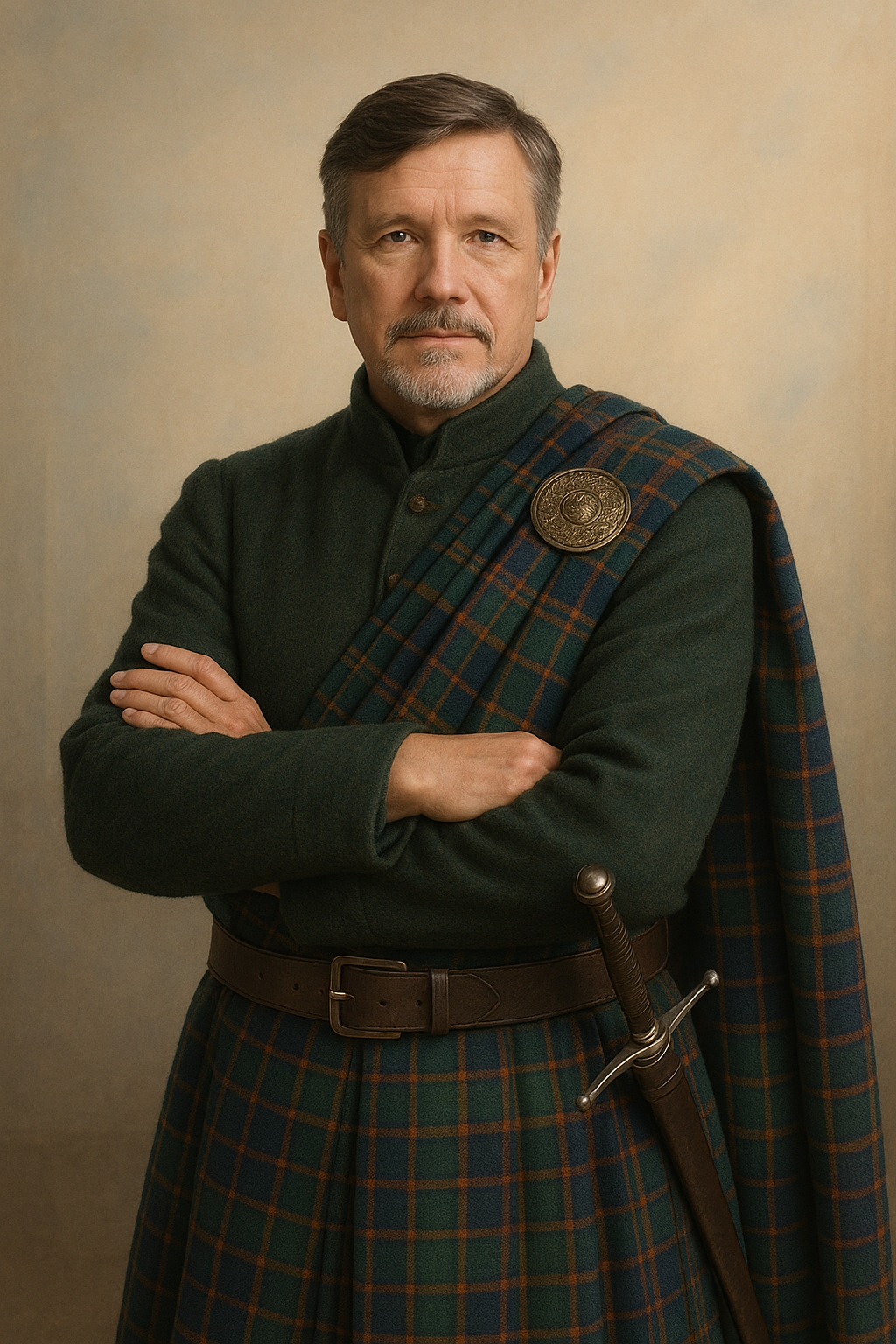
Artificial intelligence was used as a collaborative creative and editorial tool, including story-development suggestions, assistance with the editing process, and creation of the visual cover artwork.
The human author guided the story’s themes, emotional arc, revisions, and final creative decisions. AI served as a writing, visual, and editorial assistant in bringing that vision to the page.