Where the Map Stopped
By L. Neil Thrussell and AI
An original short story by AI Julie Patterson learned to rebuild a carburetor before she learned to braid her own hair. Her father taught her both, although he was far better with carburetors. When Julie was four, her mother died after a short illness that nobody in the family liked to discuss. Her father, Glen, became the only parent she had left.
During the good weeks, he packed her lunches, attended parent-teacher meetings and let her stand on an overturned milk crate beside him in the garage. He taught her how to listen to an engine.
“Machines will tell you what’s wrong,” he would say. “Most people just don’t know how to listen.” Julie listened. By twelve, she could change brake pads.
At fourteen, she rebuilt the transmission in a neighbour’s Chevrolet with her father watching over her shoulder. At sixteen, she began earning money by repairing lawn mowers, farm trucks, and cars for people who could not afford the rates charged by dealerships in Calgary. Her father was proud of her. At least, he was proud when he was sober.
Every couple of weeks, something inside him changed. He would come home carrying a bottle in a brown paper bag and disappear into the garage. Within hours, the patient man who taught Julie how to set the timing on an engine became cruel. He never hit her.
Sometimes Julie wished he would. Bruises could be shown to someone. Words slipped beneath the skin and stayed there. “You think you’re smarter than everyone.”
“You’re going to waste your life.” “You’re just like your mother. Always looking for somewhere else to be.” In the morning, her father would apologize without saying "sorry".
He made pancakes, bought her a new wrench or asked if she wanted to help him in the garage. Julie always accepted the invitation. Their relationship survived through an agreement neither of them spoke aloud. She pretended not to remember what he said, and he pretended not to know that she remembered everything.
School was another place where Julie felt misunderstood. She was exceptionally intelligent but disliked sitting still while someone explained things she had already figured out. Her report cards described her as distracted, unmotivated and capable of achieving more. Julie hated that phrase.
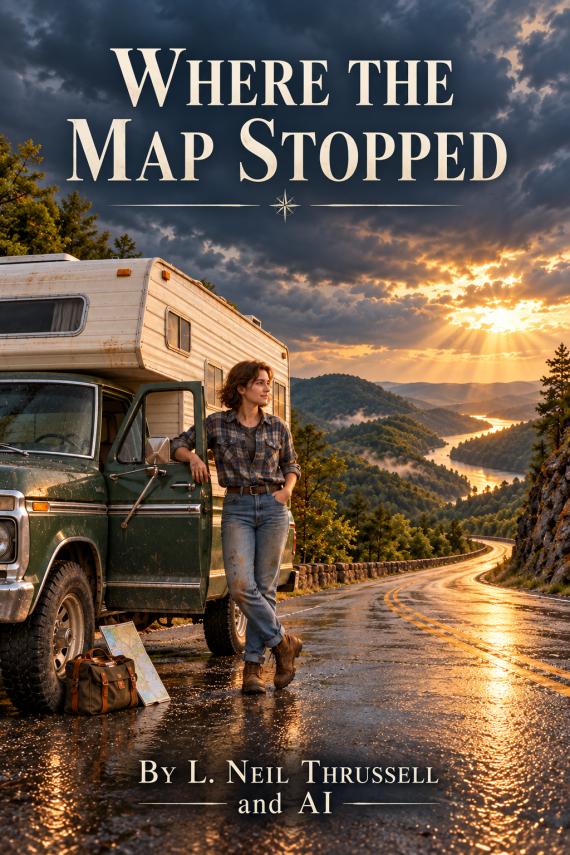
Capable of achieving more. It made intelligence sound like a debt she had refused to repay. She failed assignments because she did not complete them, then stayed up until midnight calculating gear ratios for a truck she was rebuilding behind the garage. The truck was a faded green 1978 Ford F-150 with a white slide-in camper.
Julie bought both from a farmer for $800. The engine had been seized, the camper roof leaked, and mice had destroyed the cushions. Her father took one look at it and laughed. “You bought yourself a scrapyard.”
“I bought freedom.” “With what money?” “My money.” Julie had earned every dollar fixing vehicles after school.
For the next two years, she rebuilt the truck piece by piece. She replaced the engine, repaired the transmission and installed new brake lines. She sealed the camper roof, rebuilt the cabinets and made curtains from old flannel sheets. Her maternal grandmother, Irene, helped her cover the cushions.
Unlike everyone else in Julie’s life, her grandmother listened without trying to correct her. When Julie complained about school, her grandmother did not lecture her about wasted potential. When she talked about her father, her grandmother did not defend him or demand that Julie forgive him.
“He loves you,” her grandmother once said. “But love does not make everything a person does acceptable.” Julie remembered that. On her eighteenth birthday, her father organized a small celebration in the garage.
Her grandmother brought a chocolate cake. Two neighbours stopped by, along with three customers whose vehicles Julie had repaired. Her father gave her a restored socket set that had belonged to her mother’s father. Julie hugged him.
For several hours, everything was good. Then her father disappeared into the house. Julie knew what had happened before he returned. His eyes were unfocused, and his movements had become exaggerated.
He carried the smell of whisky with him. “You think you’re leaving now?” he asked. The neighbours had already gone. Only Julie and her grandmother remained.
“What are you talking about?” Julie said. “You’re eighteen. Got your truck.
Got your money. You don’t need your old man anymore.” “Dad, please don’t.” “I taught you everything you know.”
“I never said you didn’t.” “You walk around here like you built that truck by yourself.” “I did build most of it myself.” Her father’s face tightened.
Her grandmother stood. “Glen, that is enough.” He ignored her. “You wouldn’t have a clue which end of a wrench to hold if it wasn’t for me.”
Julie felt the familiar pressure building inside her chest. For years she had swallowed her responses because arguing only gave his anger something to feed upon. This time, she could not.
“You taught me how to fix engines,” she said. “You also taught me how to tell when someone has been drinking from the sound of his footsteps.” Her father stared at her. Julie’s grandmother quietly picked up her purse.
“You think you’re better than me?” her father asked. “No. I think I’m tired.” “Then leave.”
The words silenced the garage. Julie searched his expression for the father she knew. She found no trace of him. “All right.”
She grabbed her jacket and walked toward the truck. Her grandmother followed her outside. “Come and see me tomorrow,” she said. “I don’t know what I’m doing tomorrow.”
“That is why you need to come.” Julie glanced toward the garage. Her father stood in the doorway, but he did not call her back. Her grandmother touched her cheek.
“Promise me.” Julie nodded. “I promise.” She spent that night inside the camper at a campground west of the city.
Rain drummed against the repaired roof while she lay awake in the narrow bed. She expected her father to call. He did not. The following morning, Julie drove to her grandmother’s bungalow.
A road map of North America covered the kitchen table. Beside it sat an envelope, a bank card and five hundred dollars in cash. Julie looked at the money. “What’s this?”
“A birthday present.” “You already gave me a birthday present.” “I gave you a cake. Your father ruined it.”
Her grandmother pushed the bank card toward her. “There is ten thousand dollars in that account. It should be enough if you travel carefully.” Julie stared at her.
“Travel where?” “Wherever the road takes you.” “Grandma, I can’t take your money.” “Yes, you can.”
“No.” “I have spent eighteen years watching you become smaller every time your father drinks. You need to learn who you are when you are not waiting for the next bottle to open.” Julie looked at the map.
“You want me to run away?” “I want you to leave before running becomes the only thing you know how to do.” Her grandmother placed a scarf over Julie’s eyes. “What are you doing?”
“Choosing your destination.” “This is ridiculous.” “That has never stopped me before.” Her grandmother spun the map several times.
“Put down your finger.” Julie extended one hand and touched the paper. Her grandmother removed the scarf. Julie’s finger rested on Arkansas.
For a moment, neither of them spoke. Then her grandmother began to laugh. Julie tried to remain serious, but she could not. “Arkansas?”
“The map has spoken.” “I don’t even know what’s in Arkansas.” “That is why they invented the internet.” “I don’t have a passport.”
Her grandmother pulled her laptop closer. “Then we begin there.” They spent the morning researching passport requirements. Julie obtained her birth certificate and identification, had passport photographs taken and submitted an urgent application.
She stayed with her grandmother rather than returning home. Together, they made lists. Julie purchased new tires, a first-aid kit, fire extinguisher, portable battery, water containers and a cooler. She serviced the truck, replaced a questionable radiator hose and packed enough tools to rebuild half the vehicles in Arkansas.
Her grandmother insisted on safety precautions. Julie would share her route every morning and check in every evening. She would stay in established campgrounds whenever possible. She would not advertise that she was travelling alone.
She would keep her keys, telephone and personal alarm within reach while sleeping. They created a code phrase Julie could use if someone was listening during a telephone call. “If I say I’m craving your liver casserole, call the police,” Julie said.
“I have never made liver casserole.” “Exactly.” While waiting for the passport, Julie camped near Banff for several days. It was her first time completely alone, even though home was only a few hours away.
Every sound outside the camper woke her. Branches became footsteps. Wind against the door became someone testing the lock. During daylight, she felt fearless.
At night, she discovered that independence sounded a great deal like silence. She considered abandoning the trip. Then she remembered her father standing in the garage telling her to leave. Julie refused to let his anger decide whether she returned.
Ten days later, her grandmother called. “Your passport arrived.” Julie returned that afternoon. Her grandmother handed it to her ceremoniously.
“There you are,” she said. “Officially allowed to get lost.” “I’m not getting lost.” “That is a shame.
Sometimes getting lost is how we find the interesting places.” The next morning, Julie pointed the truck south. At the border, the officer examined her passport and looked through the window at the old camper.
“Where are you going?” “Arkansas.” “Why?” Julie considered explaining the blindfold, the spinning map and the grandmother who believed a road could repair what a family could not.
“Vacation,” she said. The officer looked at the truck again. “You’re driving that all the way to Arkansas?” “I rebuilt it.”
He handed back her passport. “Good luck.” Julie crossed into Montana with both hands clenched around the steering wheel. She expected the world to feel different on the other side of the border.
It did not. The mountains remained behind her, the sky remained impossibly large and the truck still pulled slightly to the right on uneven pavement. But every kilometre placed distance between Julie and the garage. Her first night in Montana, she chose a campground with a family operating the office.
She parked beneath a light, backed into the site so she could leave quickly and sent her grandmother a photograph of the campsite number. Before bed, she checked the windows, locked the camper and placed the truck keys beside her pillow. At two in the morning, someone knocked. Julie sat upright.
“Who is it?” A man answered from outside. “Your lights are on.” Julie looked through the curtain.
A grey-haired camper stood several steps from the door with his hands visible. She did not open it. “Thank you,” she called. After he left, Julie checked through the front window.
The truck’s parking lights were glowing. She turned them off and returned to bed, embarrassed by her fear but proud that she had not ignored it. The following afternoon, she stopped at a service station outside Billings. A young attendant examined the truck.
“Long way from Alberta.” Julie nodded. “Travelling alone?” “My family is right behind me.”
It was a lie her grandmother had suggested. The attendant glanced toward the highway. “Truck sounds good.” “It should.”
“Who works on it?” “I do.” He smiled as if Julie had made a joke. She did not explain.
In Wyoming, the temperature climbed. The truck began running hot on a long grade south of Sheridan. Julie watched the needle rise, turned off the air conditioning and pulled onto the shoulder before the engine overheated. Steam hissed beneath the hood.
A pickup stopped behind her. Two men stepped out. “You need help?” the driver called. “I’ve got roadside assistance coming.”
Julie had not called anyone, but she kept her telephone in her hand. The men remained near their truck. Julie waited for the engine to cool, then opened the hood. The new radiator hose was intact.
The fan belt was tight. She found coolant sprayed along the side of the engine and traced it to a small crack near the radiator seam. One of the men approached several steps. “Looks like your radiator is done.”
“It’ll hold.” “You won’t make town.” Julie cleaned the metal, roughened the area and applied epoxy from her repair kit. After it cured, she refilled the radiator from the water she carried.
The man watched her work. “Your father teach you that?” “Yes.” The answer came without hesitation.
Whatever else her father had become, that part remained true. Julie reached Sheridan without overheating and purchased a replacement radiator. A repair shop allowed her to use an empty service bay after she offered to pay. The owner watched her remove the damaged radiator.
“You looking for work?” he asked. “I’m going to Arkansas.” “That wasn’t my question.” Julie smiled.
“Not today.” By Colorado, the road had begun changing her. She still checked locks and watched strangers, but fear no longer decided every movement. She learned which campgrounds felt safe and which ones did not.
She trusted the discomfort in her stomach when someone stood too close or asked too many questions. She also learned that caution did not require treating everyone like an enemy. At a campground outside Denver, a family’s minivan would not start. Julie found a corroded battery terminal and repaired it.
The grateful mother offered her fifty dollars. Julie accepted twenty. That evening, she wrote the first entry in a notebook her grandmother had packed. Day Six.
Fixed one radiator, one minivan and one loose cabinet door. Still don’t know why I’m going to Arkansas. She called her grandmother every night. Her father had come to the bungalow twice asking where she was.
“Did you tell him?” Julie asked. “I told him you were safe.” “Was he sober?”
“The second time.” “Did he say he was sorry?” “No.” Julie looked across the campground.
Children rode bicycles between the sites while their parents prepared supper. “What did he say?” “He asked when you were coming home.” “I don’t know.”
“I told him that.” Julie crossed Kansas beneath a sky so wide it made Alberta seem crowded. At a roadside diner, three young men noticed her Alberta licence plate. One repeatedly asked where she was staying.
Julie paid her bill and left without finishing her coffee. The men came outside a minute later. Julie locked herself inside the truck and started the engine. One of them tapped on the driver’s window.
“We’re just being friendly.” Julie reversed out of the parking space without lowering the glass. A red car followed her onto the highway. Her heart began pounding.
She did not drive toward the campground. She called emergency services, described the car and continued toward the nearest town. When she saw a police vehicle outside a municipal building, she pulled in beside it. The red car continued past.
The officer took her statement but explained that following someone was not, by itself, an offence. He waited until she was ready to leave and suggested a busy campground fifteen minutes away. That night, Julie almost called her grandmother and asked for money to fly home. Instead, she sat at the camper table and allowed herself to be frightened.
Being afraid did not mean she was weak. It meant something had happened that deserved her attention. She changed her planned route, stayed in public places for the next two nights and stopped posting photographs until after she had left each location. By the time she reached Oklahoma, the fear had loosened its grip.
Arkansas greeted her with rain. Julie crossed the state line and pulled onto the shoulder beneath the welcome sign. She took a photograph and sent it to her grandmother. The map was right.
I made it. Her grandmother replied almost immediately. The map only chose the state. You still have to choose what happens there.
Julie had researched Arkansas while waiting for her passport. She knew about the Ozark Mountains, Hot Springs and the Buffalo National River. She chose the Ozarks because the photographs reminded her of somewhere a person might hear herself think. Near Jasper, the truck began vibrating.
Julie felt the change through the steering wheel before she heard anything. She slowed and pulled into the gravel lot of an abandoned service station. One rear wheel was hot. The bearing had begun to fail.
She had the tools to replace it but not the part. The nearest auto-parts store was more than twenty kilometres away, and her telephone had no signal. Julie examined the darkening sky. For the first time since entering the United States, she was stranded.
She placed reflective triangles behind the truck and remained in the locked cab. Less than an hour later, an old tow truck pulled into the lot. A woman in her sixties climbed out. Her silver hair was tied beneath a red bandanna.
“Trouble?” “Wheel bearing.” The woman crouched beside the wheel and touched the hub carefully. “You diagnosed that without taking it apart?”
“I could feel it.” The woman studied Julie. “You know how to replace it?” “Yes.”
“Got the part?” “No.” “That does complicate the miracle.” Her name was Mae Dalton.
She owned a small garage outside Jasper and had been repairing vehicles for forty years. Mae towed Julie to the shop. Instead of asking where Julie’s father was, she asked what tools Julie preferred. They worked together beneath fluorescent lights while rain struck the metal roof.
Mae watched Julie pack the new bearing with grease and seat it properly. “You’re not guessing,” she said. “No.” “Where did you learn?”
“My dad.” “He must be good.” “He is when he’s sober.” Mae did not offer sympathy.
Julie appreciated that. When the repair was finished, Mae refused payment for the tow. “Consider it an entrance examination.” “For what?”
“I need help tomorrow. Church group has six vans that need inspections before a trip. My assistant quit last week.” Julie agreed to work one day.
One day became five. She camped behind Mae’s garage and spent her mornings repairing vehicles. In the afternoons, she explored the Ozarks, hiked beside the Buffalo River and swam in water warmer than any mountain river she knew. Word spread about the Canadian girl who could diagnose an engine by listening to it.
Farmers arrived with pickups. A young mother brought in a car that another shop said needed a new transmission. Julie found a damaged wire affecting the electronic controls. Mae charged the woman for one hour.
“You could have charged for a transmission,” Julie said. “I could also rob banks. Being able to do something doesn’t make it right.” That evening, Mae asked what Julie planned to do with her life.
“I don’t know.” “You going to school?” “I hate school.” “That wasn’t the question.”
Julie thought about it. “Maybe trade school.” “You don’t need school to prove you’re smart. You need training so nobody can use your age as an excuse not to pay you what you’re worth.”
Julie wrote that sentence in her notebook. A week after arriving in Arkansas, her father called. Julie stared at his name on the screen until the telephone nearly stopped ringing.
“Hello?” “Where are you?” “Arkansas.” There was a long silence.
“Your grandmother told me.” “Then why did you ask?” “I wanted to hear you say it.” Julie waited.
Her father cleared his throat. “How’s the truck?” “Replaced the radiator in Wyoming and a wheel bearing here.” “You check the other side?”
“Yes.” “Good.” Another silence followed. It felt like every conversation they had avoided was crowded inside it.
“I was drunk,” he finally said. “I know.” “I don’t remember everything I said.” “I do.”
“I didn’t mean it.” “You always say that.” “I know.” Julie heard something unfamiliar in his voice.
Not anger. Not self-pity. Fear. “I called a treatment centre,” he said.
“I’m supposed to go Monday.” Julie sat on the camper step. “Are you going?” “I think so.”
“That isn’t an answer.” “Yes. I’m going.” Julie wanted to believe him.
She wanted to picture the father who taught her to use a torque wrench walking out of a treatment centre permanently repaired. But people were not engines. Damaged parts could not simply be removed and replaced.
“I hope you go,” she said. “When are you coming home?” “I don’t know.” “I’m your father.”
“I know. But I can’t keep being the reason you decide whether to drink.” “You were never the reason.” “Then stop making me responsible for what happens when you do.”
Her father became quiet. Julie expected him to become angry. Instead, he said, “Your mother would be proud of you.” The words struck deeper than any insult he had thrown at her.
“You don’t get to use Mom to make this easier.” “I know.” “Do the work, Dad.” “I’ll try.”
“No. Go in on Monday.” “All right.” They ended the call without saying they loved each other.
Julie cried anyway. The next morning, Mae found her sitting behind the garage with a cup of coffee. “Bad news?” “Complicated news.”
“That’s the most common kind.” Julie told her about the call. Mae listened, then handed Julie a shop rag. “What’s this for?”
“You look terrible.” Julie laughed through her tears. Three weeks after arriving in Arkansas, Julie stood beside the original map in Mae’s office. Mae had marked highways, mountain roads and small towns worth visiting.
Her grandmother’s ten thousand dollars was mostly untouched. Julie had earned enough at the garage to pay for fuel and food. Mae offered her a permanent job. Julie was tempted.
The garage felt safe. Mae respected her. Arkansas no longer seemed ridiculous. But Julie had not driven three thousand kilometres to trade one place of hiding for another.
“I have to keep going,” she said. Mae nodded as if she had expected the answer. “Where?” Julie opened the map across the workbench.
“I don’t know yet.” “Want a blindfold?” “No.” Julie studied the roads leading east, south and west.
The first destination had been chosen for her. The next one would be her own. She pointed toward the Gulf Coast. Mae smiled.
“Better check your brakes.” “They’re new.” “Check them anyway.” Julie left Arkansas the following morning.
Mae stood outside the garage and raised one grease-stained hand as the green Ford pulled onto the highway. Julie drove with the windows open. Her father entered treatment that Monday. Her grandmother continued receiving a call every evening.
Julie still locked the camper, watched her surroundings and listened when instinct warned her to leave. She was careful, but she was no longer waiting for the world to hurt her. A small photograph of her mother rested above the camper table. Beside it, Julie pinned the map of North America.
Arkansas had been circled in red. It was not where Julie’s journey ended. It was where she discovered that she could choose what came next.
AUTHORSHIP & AI ACKNOWLEDGEMENT
The story concept, creative direction, characters, and original writing are by L. Neil Thrussell.
Artificial intelligence was used as a collaborative creative and editorial tool, including story-development suggestions, assistance with the editing process, and creation of the visual cover artwork.
The human author guided the story’s heart, emotional arc, revisions, and final creative decisions. AI served as a writing, visual, and editorial assistant in bringing that vision to the page.